
WHEN THE EXACT CAR STOPPED MATTERING




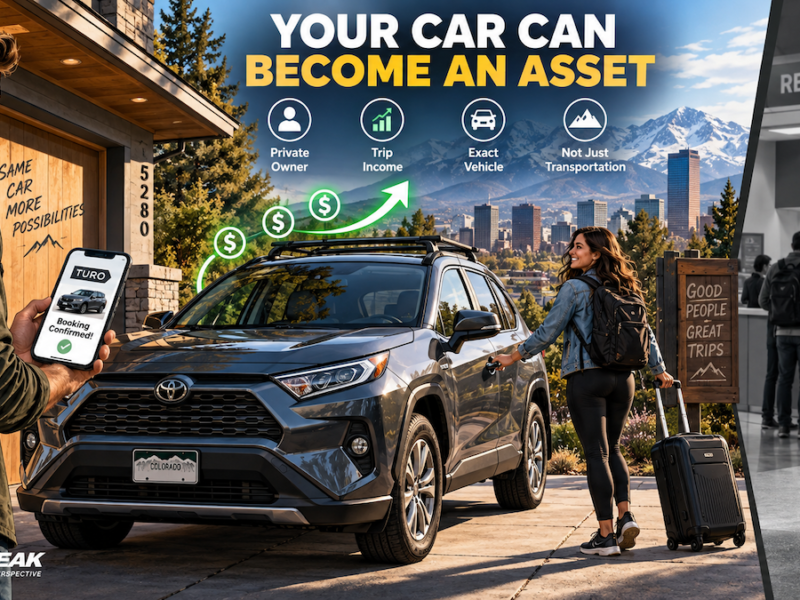
I Shopped Turo So I Could Pick the Exact Car. Then I Rented a Mystery Car.
I’m The Cool Car Guy. I’ve spent a couple of decades around automobiles. I’ve owned a dealership. I’ve sold and brokered a lot of cars. So I’m the kind of person who actually cares whether the rental company’s: “SUV or similar” is the SUV I wanted… or something somebody in a corporate office decided was “similar.” Which is why, when a friend suggested Turo for an upcoming trip to Denver, the idea immediately made sense to me. Turo lets me pick the actual car. Not the class. The car. Year. Make. Model. Pictures. Host. Reviews. Mileage. Color. Everything.
It’s a little like choosing an Airbnb or VRBO from an individual owner instead of booking a room at a Hilton. I get it. This should have been an easy win for Turo. Instead… I booked something Avis literally calls: MYSTERY CAR 😂 And there’s a reason.
FIRST, I’M NOT TRYING TO RENT THE CHEAPEST THING WITH FOUR TIRES
Let’s establish that before somebody decides this story is about saving twenty bucks. My wife and I are flying into Denver to run a marathon. 26.2 miles. We’re not taking the family on a week-long Colorado vacation where the rental car becomes part of the adventure. We’re flying in. Running the Boulderthon. Driving where we need to go. Then flying home. The car has a pretty simple job: Be there. Start. Drive. Don’t become another problem I have to solve. I’ll absolutely pay more for convenience when convenience is worth paying for. But there’s also a point where the price difference becomes large enough that I’ll do some extra homework.
That’s where Turo got interesting.
TURO’S BIGGEST ADVANTAGE IS VERY REAL
Let’s give Turo credit where it’s due. The traditional rental-car industry spent decades teaching us to accept two magical words: OR SIMILAR Toyota Corolla or similar. Ford Edge or similar. Chevrolet Malibu or similar. What exactly is “similar”? Apparently whatever they need to get out of Row 17 that afternoon. 😂 Turo changes that relationship. I’m looking at the actual vehicle. I saw newer vehicles. Older vehicles. Kia Souls. Ford Edges. Mercedes GLKs. Toyota Tacomas. Jeep Patriots. I could actually look at a car and say: That’s the one. As a car person, I really like that.
BUT THE EXACT CAR ALSO MEANS THE EXACT OWNER
This is the part traditional rental customers may not immediately think about. When you switch from Avis to Turo, you’re not merely changing the automobile. You’re also changing the business you’re renting from. One Turo listing might belong to an experienced host with hundreds of completed trips. Another might be somebody renting out a vehicle they don’t need this week. One might offer seamless Denver International Airport pickup. Another might require you to collect the vehicle somewhere in Aurora. One might include 800 miles. Another might have a different allowance. One car might be three years old. Another might be twelve.
That’s the beauty of a marketplace. You get choices. But choice also means: EVALUATION Every car becomes its own little deal.
HOW OLD DO I REALLY WANT MY RENTAL CAR TO BE?
This became more interesting than I expected. I saw vehicles that would probably be perfectly fine… but weren’t necessarily what I wanted when something much newer was available for roughly the same money. One airport option was a 2014 Jeep Patriot Sport. Could it be a terrific little rental? Absolutely. But here’s how I think about it. If I’m borrowing somebody else’s vehicle for a weekend trip, I generally want a newer ride unless the older vehicle gives me a meaningful discount or I’m deliberately renting it because I want that particular car. Give me a newer Ford Edge for roughly the same price? I’m taking the Edge.
There’s a pretty good chance my iPhone will connect to it without me digging through the console looking for some obsolete USB cable. 😂 Give me a 2004 Tacoma at a bargain price because I specifically want to drive an old Tacoma? Now we’re having fun. But a twelve-year-old ordinary vehicle for only slightly less than something much newer? That doesn’t excite me. Remember: I’m going to run a marathon. I don’t want the rental car to be the interesting part of the weekend. I want it to start when I push the button. I definitely don’t want to see a glowing: CHECK ENGINE on my way to run 26.2 miles.
MILEAGE LOOKS DIFFERENT WHEN YOU THINK LIKE THE OWNER
This is one place where Turo made me think differently about the automobile itself. Traditional rental fleets operate at enormous scale. Thousands of vehicles. Assets moving in and out. Utilization percentages. Depreciation curves. Fleet replacement. Auction disposal. A private Turo host looks at mileage differently. Those miles are going on his or her car. Their tires. Their brakes. Their oil. Their resale value. Their maintenance schedule. Of course they care. And from the owner’s perspective, mileage limits make perfect sense. But from my perspective as the renter? It’s another variable I need to evaluate.
One vehicle may include 600 miles. Another 800. Another may offer unlimited mileage. I have to determine whether that’s enough for what I’m planning to do. Again… not bad. Not unfair. Just another part of the transaction.
THEN I STARTED LOOKING AT WHERE THE CARS ACTUALLY WERE
This one made me laugh. I searched around Denver International Airport. Some vehicles were offered at the airport. Others had host locations in Denver or Aurora. Some hosts offered multiple pickup choices. Airport. Hotel. Train station. Host location. At first I wondered: Why are so many of these people trying to get me away from the airport? Then I got farther into checkout. Ah. Money. 😂 Denver International Airport has its own fee structure for Turo airport activity. Suddenly an off-airport pickup makes a lot more sense. Avoid some of the airport economics. Great.
Except now I may need transportation to get to the transportation I’m renting so I don’t have to keep paying for transportation. Read that again. 😂 There’s a point where the Uber ride required to retrieve my cheaper rental car needs to become part of the rental-car price. If I save $40 and spend $35 going to find Larry’s car in Aurora… what exactly did I accomplish?
THEN I FOUND A TURO THAT ACTUALLY MADE SENSE
And this wasn’t some old beater. It was a 2024 Kia Soul. 4.98 rating. 153 trips. Denver International Airport pickup. 800 miles included. Now we’re talking. That’s a legitimate alternative to a conventional rental car. The subtotal: $283.25 Then came taxes and permit fees: $73.27 Trip total: $356.52 And I hadn’t added a protection plan. Turo was even showing that I was already saving $45 through a three-day discount and a non-refundable rate. So this wasn’t some deliberately expensive Turo listing. This was one I could realistically see myself renting. But $73.27 in taxes and permit fees is not exactly pocket change.
Apparently Denver International Airport has an imaginary troll living underneath the terminal. And apparently the troll takes credit cards. 😂 Of course, I’m joking. Those fees aren’t actually imaginary. They’re very real when they hit my credit card. And that was the point where choosing the exact vehicle was no longer enough by itself. Now I needed to compare the entire transaction with the old-school rental companies.
THE RENTAL COMPANIES HAD ALMOST LOST ME
At one point I was seeing conventional rental prices near $400. One comparison page showed an economy rental around: $385. Intermediate? About: $402. Then I checked Hertz. Their answer? No cars available. Okay. Now Turo looked fantastic again. If Turo saves me $150 or $200, I’ll spend a little extra time choosing a host. I’ll inspect the car. I’ll take pictures. I’ll verify the mileage. I’ll figure out pickup. Because: $200 IS REAL MONEY There’s a price where the extra work becomes worth doing. But then I went directly to Avis. And the plot changed again.
AVIS OFFERED ME THE EXACT OPPOSITE OF TURO
Turo: Here’s your exact 2024 Kia Soul. Avis: MYSTERY CAR No, really. That’s what Avis calls it. The listing says my Mystery Car may be: Gas. Hybrid. EV. Or similar. It doesn’t get much more “or similar” than that. 😂 This should offend every car-guy instinct I possess. And initially the Avis price wasn’t especially exciting either. Then I noticed the member-rate offer. Create a free account. Log in. See what happens. So I did.
THE MYSTERY CAR WON
Here’s what I actually booked. Vehicle rate: $211.11 Taxes and fees: $109.63 Add-ons: $0 Mileage: UNLIMITED Final total: $320.74 And there’s another lesson hiding in those numbers. Avis charged me $109.63 in taxes and fees on a vehicle rate of $211.11. So apparently Avis knows the airport troll too. 😂 The traditional rental companies aren’t escaping the airport cost structure. They’re dealing with it at scale. But after everything landed on the checkout screen, I had gone into this process because Turo would let me pick the exact vehicle… and emerged having spent $320.74 on a car I can’t even identify. That is objectively funny.
WHY WOULD THE COOL CAR GUY CHOOSE A MYSTERY CAR?
Because the automobile was only one part of the transaction. This is where I think people misunderstand markets. Turo and Avis aren’t necessarily selling me identical products.
Turo is selling me specificity.
A particular car. A particular owner. A particular set of photographs. A particular mileage allowance. A particular pickup arrangement. A particular experience.
Avis is selling me standardization.
I don’t know the exact vehicle. But I know I’m dealing with a large fleet operator. I know where the rental process happens. I know I have unlimited mileage on this booking. I know the total. And most importantly… Avis was cheaper. That’s a difficult combination to beat.
THE RENTAL COMPANY’S REAL PRODUCT MAY NOT BE THE CAR
Think about that. The conventional rental company deliberately makes the automobile interchangeable. You ordered this class. Here’s a vehicle in this class. Drive it. Bring it back. Next customer. Cars become inventory. Turo does almost the opposite. Every automobile has an identity. Every host has an identity. Every listing has a history. Every transaction can feel different. That makes Turo more interesting. It can also make it more complicated. Neither model is automatically better. They’re solving slightly different problems. And depending on what you’re doing, one may make more sense than the other.
PRICE CHANGES EVERYTHING
Suppose the Avis Mystery Car had stayed at $402. Suppose the Turo Kia had been $250 all-in. Easy decision. I’d take the Kia. I’ll take the pictures. I’ll check the host. I’ll verify the mileage. I’ll figure out pickup. I’ll do a little extra work to save $150. Again, I’m not trying to prove how cheaply I can rent a car. I’m trying to determine what the convenience is worth. There’s a number where I’ll gladly pay Avis to make the transaction boring. There’s another number where I’ll happily do more work and use Turo. For this trip, the final numbers were: Avis Mystery Car: $320.74 versus
2024 Turo Kia Soul: $356.52 before adding an optional protection plan Now you’re asking me to pay more while also doing more evaluation. The exact vehicle isn’t worth that much to me on this trip. I’m going to Colorado to run. Not spend the weekend admiring my rental car.
TURO IS STILL A FASCINATING CAR BUSINESS
Here’s where this gets especially interesting to me as a car guy. Turo takes privately owned automobiles—assets that normally sit parked much of their lives—and gives owners a way to monetize unused time. Now the vehicle’s: Age. Mileage. Condition. Location. Desirability. Owner reputation. Availability. all become part of the product. That’s very different from Avis buying and managing a giant standardized fleet. And for certain cars, I could see Turo being incredibly attractive. Maybe you want a specific performance car. A particular EV. A Jeep for a specific trip. A pickup. A convertible.
Maybe you’re thinking about buying a particular vehicle and want to live with one for a few days first. Now the ability to choose the exact automobile may actually be worth a premium. That’s something a conventional rental counter doesn’t always do very well.
IF I OWNED A TURO CAR, I WOULDN’T LET TURO BE MY ONLY MARKETING
This is where my brain probably works differently than a lot of people. While I was sifting through all these Turo cars, I kept thinking: If this were my car, why would I let it exist only as one more listing buried among hundreds of other Turo cars? If I owned that Kia, I’d create a $7 Cars Freak Parking Spot for it. I’d put up the photos. Tell people what it is. Explain why I chose it for my Turo business. Talk about how many trips it has completed. What renters like about it. What it costs me. What it earns. What I’ve learned. Maybe I’d even talk about whether my little rental-car business is actually profitable.
Then I’d give that story its own URL and use it to send people toward the car. Why? Because look who you’re competing with. Avis Budget Group reported $94 million in advertising expense and another $95 million in digital marketing costs in 2025. That’s $189 million spent getting brands and offers in front of people. And I’m the little Turo owner thinking: “Seven dollars to create another page promoting my car? Why would I do that?” Oh, I don’t know. Maybe because you’re competing for the same rental customer as companies spending nine figures on advertising and digital marketing. 😂 That’s common sense in my world. You may not have Avis money.
You can still build another media asset.
TURO ALSO MAKES DOCUMENTATION PART OF THE TRANSACTION
When you’re borrowing somebody else’s personal asset, documentation matters. And I understand why. If it were my car, I’d want documentation too. So with Turo I’m thinking about: Photos of the body. Wheels. Interior. Odometer. Fuel gauge. Existing damage. Then I want pictures again when I return it. That’s reasonable. It protects both sides. But it’s another example of how the automobile itself remains central to the Turo transaction. With my Avis Mystery Car? I’m not emotionally involved. It isn’t Larry’s Kia. It’s: UNIT WHATEVER 😂 I’ll inspect it. I’ll drive it. I’ll fill it. I’ll give it back.
THE FUNNIEST PART IS THAT I STILL DON’T KNOW WHAT I’M GETTING
Gas? Hybrid? EV? No idea. Maybe I’ll show up and get something boring. Maybe I’ll get something surprisingly good. Maybe Avis is about to provide the next Cars Freak Parking Spot without even knowing it. Because the reservation literally says: MYSTERY CAR And as The Cool Car Guy… I booked it anyway. 😂
THE COOL CAR GUY TAKEAWAY
I wouldn’t tell somebody: Never use Turo. That would be ridiculous. I also wouldn’t tell somebody: Always use Turo because it’s cheaper. My own checkout disproved that. And I wouldn’t tell somebody: Always use the traditional rental companies. Twenty minutes earlier I was staring at $400 conventional rentals and Turo looked fantastic. Here’s what I would tell you:
KNOW WHAT YOU’RE BUYING.
If the exact vehicle matters, Turo has a tremendous advantage. If you find a great host and the savings are substantial, Turo can make a lot of sense. If traditional rental inventory is scarce or expensive, Turo becomes even more interesting. If I’m vacationing for a week and the vehicle is part of the experience, my decision might be completely different. But for this trip? I’m flying to Colorado. I’m running 26.2 miles. I’m flying home. If the traditional rental company gives me a lower final checkout price, unlimited mileage and a standardized transaction… apparently I’m perfectly capable of giving up the exact car.
Even if the website refuses to tell me what the hell I’m getting. 😂
WANT TO DO WHAT I JUST DID?
Look at the page you’re standing on. This is the product. I needed a rental car. I started comparing Turo with Avis, Hertz, Dollar and the rest. The prices moved. The numbers changed. AI even gave me pricing that turned out to be way off. So I kept digging. I took screenshots. I figured out what actually happened. I added my own experience and opinion. Then I turned the entire rabbit hole into the Parking Spot you’re reading right now. Now this page has its own URL. There’s a view counter at the bottom. I can share it on Facebook. LinkedIn. X. Email. Another website. Anywhere I want.
And tomorrow, next month or two years from now, somebody searching Google for something about Turo, Denver rental cars, airport fees, Avis or Mystery Cars could potentially find this page. That’s the difference.
THIS ISN’T A SOCIAL-MEDIA POST DISAPPEARING DOWN SOMEBODY ELSE’S FEED.
I parked it. That’s why I call it a Parking Spot. And now the really interesting part starts. Suppose 7 people see what I did and decide to create Parking Spots of their own through my affiliate relationship. Now there are 7 more media assets being built. Their stories. Their URLs. Their view counters. Their audiences. Their reasons to share what they created. Now suppose each of those 7 people gets 7 more people to create Parking Spots. That’s another: 49 PARKING SPOTS And those qualifying purchases can continue through the multi-tier affiliate structure. Now you can see how this starts to compound.
More Parking Spots. More pages. More links. More searches. More eyeballs. More opportunities to earn. More media assets working across the Freak Sites. Nobody needs to become an influencer. Nobody needs a million followers. You need something worth talking about… and somewhere to park it. I just showed you exactly how I do it. I found something I was already doing. Used AI as part of the studio. Did my own research. Added screenshots. Added experience. Added an opinion. Created the Parking Spot. And now I’ll send people to it. That’s the business.
Create it.
Park it. Share it. Show people how it works. Then show them how to do the same thing. Becoming an affiliate is free to apply. When somebody purchases a qualifying Parking Spot directly through your affiliate relationship, you earn 20% on that direct sale. And when the people you introduce start creating and sharing too, the affiliate structure can continue beyond that first person. That’s where this gets interesting. You’re not merely chasing a click.
You’re building a network of people building media assets.
And every one of those assets creates another opportunity to be seen.
Want to do what I just did?
👉 Become An Affiliate — Free To Apply
Then build something worth parking.